


By Dr. Dody Tyneway Robi, DVM | Updated October 2026
In the exam room, the conversation starts with the problem the owner can see: hairballs that keep coming back, straining in the litter box, vomiting that has become routine, a senior cat who seems a little off. That list does not even include weight. About 61 percent of cats in the United States are classified by veterinary teams as overweight or obese (1). Food is rarely the center of the conversation.
After more than thirty years of practice, I have come to see nutrition as something that contributes to nearly every common problem cats develop.
Once the talk turns to food, it usually collapses into formats: dry or wet, raw or freeze-dried, canned or gently cooked. Format tells you how a food was processed. It does not tell you whether the food is complete. This guide covers what complete and balanced cat food means and how the common options compare.
What does complete and balanced cat food mean?
Complete and balanced means a food supplies every essential nutrient in the right amounts for a stated life stage. AAFCO (the Association of American Feed Control Officials) publishes the nutrient profiles for each life stage. AAFCO does not approve, certify, or test any food. A company earns the right to print the statement by formulating the recipe to meet the profile or by feeding the food to cats in a trial.
Neither route is perfect. Formulation shows that a recipe meets the profile on paper or by analysis, not how the finished food performs in a real cat. A feeding trial tests the food in live animals, but trials are relatively short and small. For that reason the WSAVA Global Nutrition Committee recommends looking past the statement itself to who formulated the food (ideally a board-certified veterinary nutritionist or someone with a PhD in animal nutrition) and whether the company analyzes the finished product (2).
Two label details matter. A food labeled for all life stages meets the growth and reproduction profile, so it is built around the needs of growing animals. A food labeled for intermittent or supplemental feeding is not complete and should not be a cat's main diet (2).
Most deficiencies show up over months to years. Taurine deficiency can cause heart disease and blindness, and thiamine deficiency causes neurological signs. Other signs that a cat is not thriving include poor body condition and, depending on the imbalance, urinary or metabolic problems.
Why are cats obligate carnivores, and why does it matter for their food?
Cats are obligate carnivores, not facultative ones. A facultative carnivore (a dog, for example) can thrive on a mix of animal and plant foods. A cat cannot. Cats evolved to get almost all of their nutrition from animal tissue, and they require certain nutrients found almost exclusively in animal sources, including taurine, arachidonic acid, and preformed vitamin A (retinol). This part of the evidence is well established.
Plant ingredients can appear in small amounts, but they are not the foundation of a healthy cat diet. A complete and balanced cat food has to reflect this biology.
Is dry food a good long-term choice for cats?
Dry food can be complete and balanced, and many cats live long lives on it. For long-term feeding I still prefer higher-moisture, lower-starch food for most cats, for two reasons: water and starch. The strength of the evidence differs for each, so I take them separately.
Water. Cats descend from desert-dwelling wildcats, have a low thirst drive, and get most of their water from prey. Dry food contains about 10 percent moisture; canned food typically contains about 75 percent or more. Cats eating dry food do drink more water, but current evidence suggests they do not fully make up the difference. Dilute urine is a cornerstone of managing urinary crystals and idiopathic cystitis, which is why moisture is so often part of the plan for cats with urinary disease. Whether dry food itself causes urinary disease in otherwise healthy cats is less settled; most of the data are associations rather than proof of causation.
Starch. Starch is the flour of kibble. The extrusion process that shapes the crunch requires it, and you cannot make a cake without flour. Cats have a limited capacity to handle large carbohydrate loads. Obesity is the best-established risk factor for feline diabetes. Whether dietary carbohydrate adds risk beyond the weight it helps put on remains debated, and the evidence is limited and largely observational. In people, diets heavy in highly processed carbohydrate are linked to insulin resistance; it is reasonable to ask whether cats follow a similar pattern, but that is a question, not a finding.
Freeze-dried and dehydrated raw products are low in moisture unless water is added. Fed dry, they carry the same moisture limitation as kibble, plus the pathogen considerations of frozen raw unless the manufacturer applied a validated kill step before drying.
What are the best complete and balanced cat food options?
No single format is right for every cat. Each has a place, and each has a failure point.
Canned and wet food. Canned food runs about 75 to 80 percent moisture, close to the moisture content of the prey cats evolved to eat. For a cat with urinary concerns, or simply for prevention, it is often the easiest upgrade an owner can make. Cats that resist the change often do better with a gradual transition; our guide to wet food for picky eaters walks through practical ways to make the switch.
Raw. H5N1 avian influenza has been detected in commercial raw cat food, and the FDA has linked a contaminated raw product to a sick cat that was euthanized Although rare, it remains a risk that is easily avoided by cooking poultry to 165 degrees Farenheit (3). Surveys of raw pet foods also find Salmonella and Listeria at substantially higher rates than in heat-treated foods (4). Until that risk changes, I recommend cooking poultry for cats. A commercially formulated raw diet that uses high-pressure processing or validated pathogen testing may be appropriate for some healthy adult cats in households without high-risk people, but it remains the higher-risk choice.
Gently cooked and fresh. Food cooked to a safe temperature (165°F for poultry) provides a kill step and may preserve more heat-sensitive nutrients than high-heat canning or extrusion, although direct comparisons in cats are limited. "Fresh" and "gently cooked" are not regulated terms, so the same questions about formulation and adequacy apply.
In my experience, the cats who do best long term eat higher-moisture, lower-carbohydrate food that is formulated to be complete and balanced. That means respecting a cat's biology with wet, gently cooked, or carefully built homemade food. This is clinical experience and expert opinion, not the product of long-term comparative trials.
Want to know more about cat food recipes?
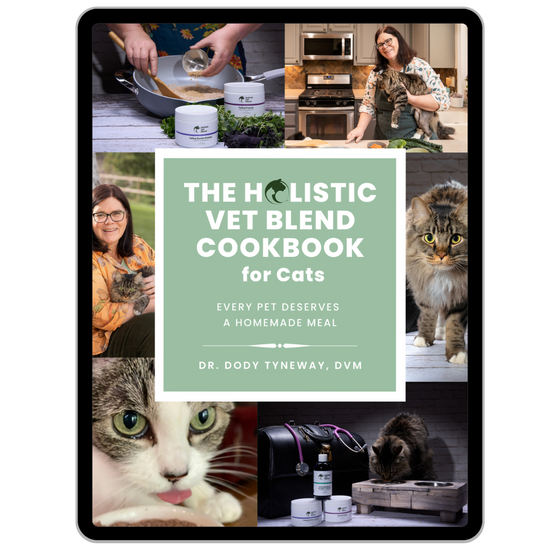
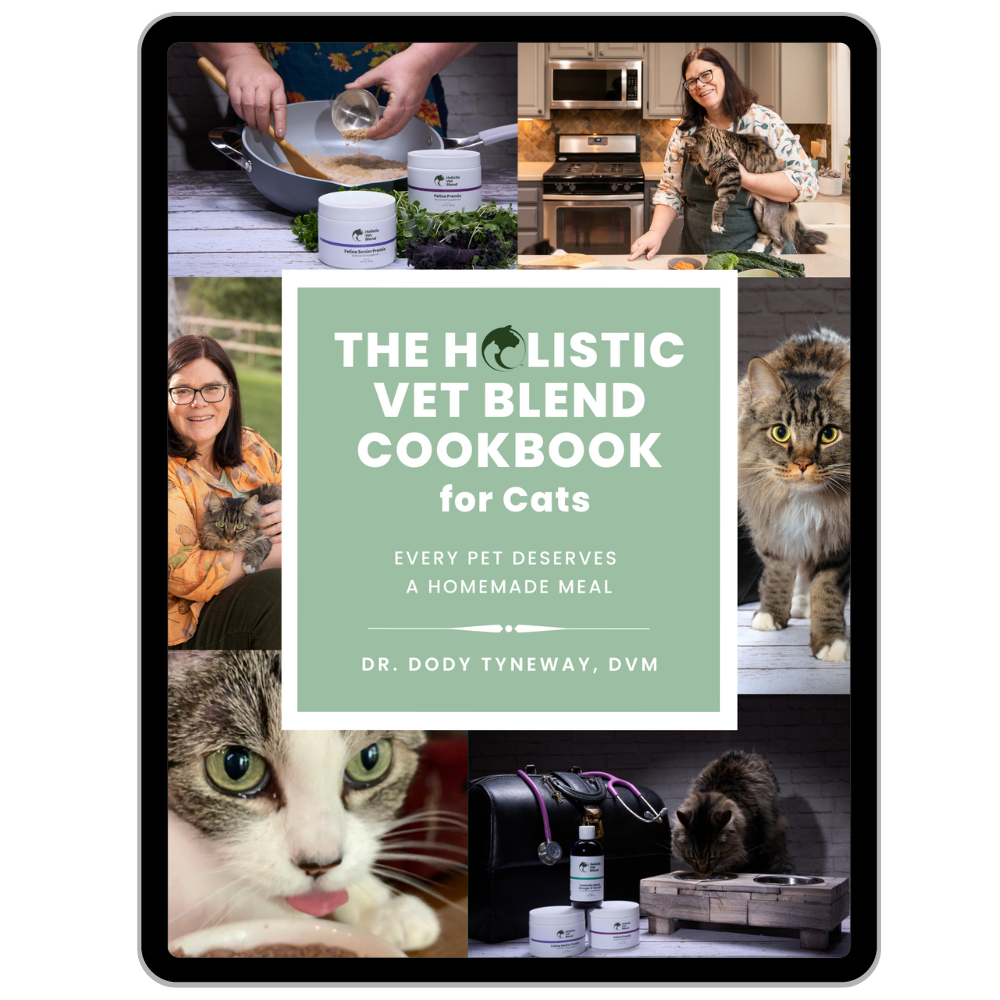
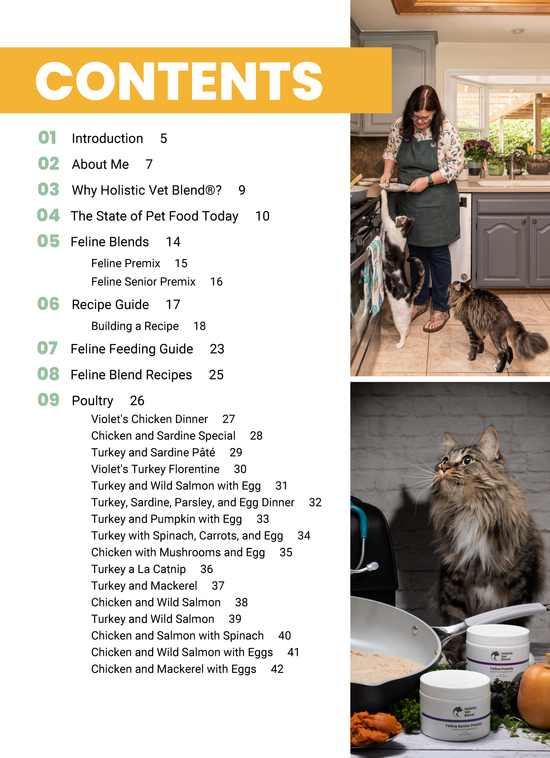
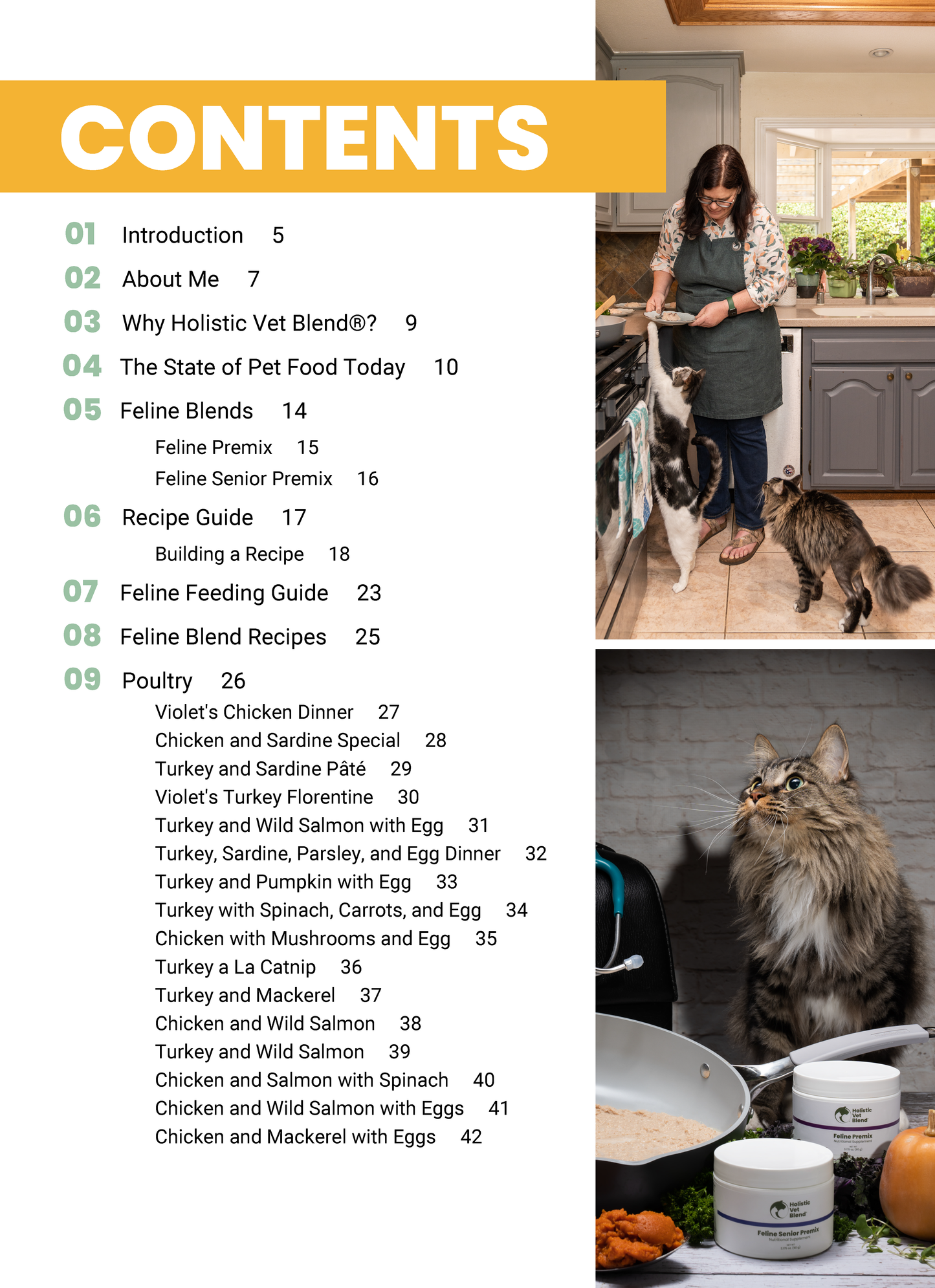
Download my free cookbook for cats: a few favorite recipes, portioned and balanced the same way I make them for my own cats.
Can homemade cat food be complete and balanced?
Yes, when the recipe is formulated by a qualified nutritionist and prepared exactly as written. Most recipes found in books and online are not. A University of California, Davis analysis of 114 home-prepared feline maintenance recipes from pet care books and online sources found that none of the 94 detailed enough to analyze provided every essential nutrient at the recommended level (5). Many also included ingredients unsuitable for cats, such as garlic and onion.
A recipe on paper is not a finished diet. Follow it exactly, because substitution is where balance quietly breaks. For an example of how a nutritionist-reviewed recipe is structured, see our vet approved homemade cat food recipes.
How do the cat food formats compare?
| Factor | Dry kibble | Canned / wet | Raw (frozen) | Gently cooked / homemade | Freeze-dried (fed dry) |
|---|---|---|---|---|---|
| Moisture | About 10% | About 75 to 80% | 65 to 75% | 65 to 75% | Under 10% unless rehydrated |
| Carbohydrate | High | Low to moderate | Very low | Low to moderate | Low |
| Pathogen risk | Low | Low | Higher, especially poultry | Low if properly cooked | Higher unless a kill step was used |
| Hydration support | Poor | Strong | Strong | Strong | Poor unless water is added |
| Balance risk | Low with reputable brands | Low with reputable brands | Low for formulated commercial products; high for home recipes | Low for formulated commercial products; high for unsupplemented home recipes | Low for formulated commercial products |
| Long-term fit for most cats | Acceptable; lowest on my list for most cats | Practical, widely suitable | Selected cases only | Strong when professionally formulated | Limited unless rehydrated and accepted |
How do you choose the right complete and balanced cat food?
The right food depends on the individual cat, the household, and the food itself.
The cat. Kittens and pregnant or nursing cats have higher nutritional demands for growth and lactation and need a food or recipe formulated for those stages. A diagnosed condition such as diabetes, kidney disease, or urinary crystals may point toward a specific therapeutic diet, which is a conversation with your veterinarian. Any cat on immune-suppressing medication should avoid raw food.
The household. Young children, elderly relatives, pregnant family members, or anyone immunocompromised should move raw options down the list (4).
The food. Choose a species-appropriate, higher-moisture food (wet food for most cats) that is complete and balanced, was formulated by a board-certified veterinary nutritionist or a PhD animal nutritionist, and fits your budget. A good choice you can sustain beats a perfect one you cannot.
Then bring the choice back to your veterinarian. Body condition, stool, energy, and bloodwork will tell you how your cat is responding far better than any label.
Frequently asked questions
What does complete and balanced cat food mean?
It means the food is formulated or feeding-trial tested to supply every required nutrient for a stated life stage when fed as the sole diet. AAFCO sets the nutrient profiles but does not approve any food.
Is there such a thing as AAFCO approved cat food?
No. AAFCO writes nutrient profiles and label rules but does not approve, certify, or test pet foods. A label may state that a food meets an AAFCO profile through formulation or a feeding trial; that statement is the company's own claim, which is why who formulated the food matters.
How do I know if a cat food is complete and balanced?
Find the adequacy statement on the label. It should say the food is complete and balanced for a named life stage, and whether that was shown by feeding trial or by formulation. Then ask who formulated it and whether the finished product is analyzed (2).
Is wet food better than dry food for cats?
Wet food supplies the moisture cats need because they have a low thirst drive, and it usually contains less starch. I favor it for most cats long term, particularly those with urinary concerns. The evidence for the hydration benefit is stronger than the evidence for diabetes prevention.
Is homemade cat food complete and balanced?
Only when formulated by a qualified nutritionist and prepared as written. In a University of California, Davis analysis of 114 published recipes, none of the 94 that could be analyzed provided every essential nutrient at the recommended level (5).
Is raw cat food safe?
Raw diets carry a higher pathogen risk than cooked diets (4), and H5N1 has been detected in commercial raw cat food (3). I recommend cooking poultry for cats. Raw is not appropriate for households with young children, elderly or immunocompromised members, or for cats on immune-suppressing medication.
Is dry cat food complete and balanced?
Many dry foods carry an adequacy statement and are complete and balanced. They remain a less favorable long-term fit for many cats because of low moisture and high starch.

References
- Association for Pet Obesity Prevention. 2022 State of U.S. Pet Obesity: Survey Results. https://www.petobesityprevention.org/2022-state-of-pet-obesity-report-summary
- WSAVA Global Nutrition Committee. Guidelines on Selecting Pet Foods. World Small Animal Veterinary Association. Updated March 2021. https://wsava.org/wp-content/uploads/2021/04/Selecting-a-pet-food-for-your-pet-updated-2021_WSAVA-Global-Nutrition-Toolkit.pdf
- CIDRAP. FDA warns of H5N1 avian flu detection in raw cat food. Center for Infectious Disease Research and Policy. https://www.cidrap.umn.edu/avian-influenza-bird-flu/fda-warns-h5n1-avian-flu-detection-raw-cat-food
- Davies RH, Lawes JR, Wales AD. Raw diets for dogs and cats: a review, with particular reference to microbiological hazards. Journal of Small Animal Practice. 2019;60(6):329-339. doi:10.1111/jsap.13000
- Wilson SA, et al. Evaluation of the nutritional adequacy of recipes for home-prepared maintenance diets for cats. Journal of the American Veterinary Medical Association. 2019;254(10):1172-1179. doi:10.2460/javma.254.10.1172
This article is for general education and does not replace individual advice from your veterinarian. Diet changes for cats with medical conditions, and all diets for kittens and for pregnant or nursing cats, should be made with veterinary guidance.