


More and more dog parents are choosing homemade meals, and it’s easy to see why. When you’re making homemade dog food, you know exactly what’s going into your dog’s bowl. Fresh whole food ingredients, simple recipes, and no mystery fillers.
But while homemade food is a great foundation, there’s an important ingredient many well-meaning dog parents miss: nutritional balance.
Making homemade dog food starts with whole food ingredients
If you search for homemade dog food recipes online, you’ll notice a lot of them include ingredients like:
- fresh meat
- vegetables
- eggs
These whole foods are a great start. By using whole foods in your homemade dog food recipes, you ensure your pup is avoiding artificial flavors, preservatives, fillers, and other less-than-desirable ingredients found in many commercial dog foods.

But just because a recipe contains whole foods doesn’t mean it’s nutritionally complete for your dog. Dogs have very specific needs when it comes to vitamins and minerals, and many recipes you find online sadly fall short.
Which is where “feed the rainbow” comes into play.
“Feeding the Rainbow” Makes Homemade Dog Food Nutritious
When we talk about “feeding the rainbow,” we’re referring to using a wide variety of whole foods to support nutrient diversity.
Different foods offer different benefits:
- Organ meats provide B vitamins, trace minerals, and natural flavor
- Including vegetables of different colors contribute crucial vitamins, antioxidants, and fiber
- Eggs offer high-quality protein and important nutrients like choline

When you’re making homemade dog food, rotating ingredients and colors helps expand the range of nutrients your dog receives. This diversity is an important part of the homemade dog food diet, but it’s still only part of the picture.
The problem with many homemade dog food recipes
When pet parents decide to go homemade, they might think, “Okay, so if giving my dogs chicken or beef isn’t enough, can’t I just follow a recipe?”
Unfortunately, not all recipes are created equal. When over 1,700 online homemade dog food recipes were analyzed by the Dog Aging Project, they found that only 6% of them were “potentially nutritionally complete.”
So for every 100 recipes online, about 94 of them aren’t going to give your dog the nutrition they need to be healthy. Those aren’t great odds.
Common nutritional deficiencies that the study found in these recipes included:
- Calcium
- Vitamin D
- Trace minerals like zinc and copper
- Taurine
- Choline
Recipes are a great starting point, but they aren’t designed to meet every dog’s nutritional needs on their own. Nutrient requirements vary by size, age, and lifestyle, and small gaps can add up over time.
That’s one of the really dangerous things about a nutritionally incomplete diet - the symptoms of nutrient deficiencies don’t shop up immediately. They build up slowly and gradually, making it easier for pet parents to miss the early signs.

For example, Vitamin D deficiency can cause problems with a dog’s immune system. Too little Vitamin D and your dog will be more susceptible to illnesses and have a harder time recovering from any illnesses they get. Healing from accidents or injuries will also take longer.
In addition, low levels of vitamin D makes it harder for a dog to maintain the proper amount of calcium in their blood. If the level of calcium gets too low (a condition called hypocalcemia), a dog can develop a loss of appetite or listlessness. In severe cases, the dog can even have convulsions.
This doesn’t mean that a clean, complete, whole-food-based homemade dog diet is an impossible dream.
It just means you need the right recipes supplemented with a veterinarian-formulated premix.
Why a vitamin & nutrient premix is essential
When making homemade dog food, a vitamin and nutrient premix acts as the safety net that completes your recipe. So instead of guessing which rotation of vegetables and meats will fill your dog’s needs or what vitamins to add and how much, you have a vet-approved premix designed to fill common nutritional gaps so your dog gets the complete and balanced nutrition they need.
In other words, whole foods help you feed the rainbow.
A premix helps ensure that the rainbow is complete.

The benefits of a balanced homemade dog food
Fresh, whole foods and the right added nutrients can be a powerful combination.
When a dog is eating homemade meals that are both diverse and nutritionally complete, many dog parents notice their pups have:
- more energy
- healthier skin
- shinier coat
- improved digestion
- healthier weight
- allergy improvement
- overall improved wellness

The benefits make it easy to understand why many dog parents are leaning away from processed kibble and toward making homemade dog food.
And we’re dedicated to making it easier for them.
Vet-approved homemade dog food recipes
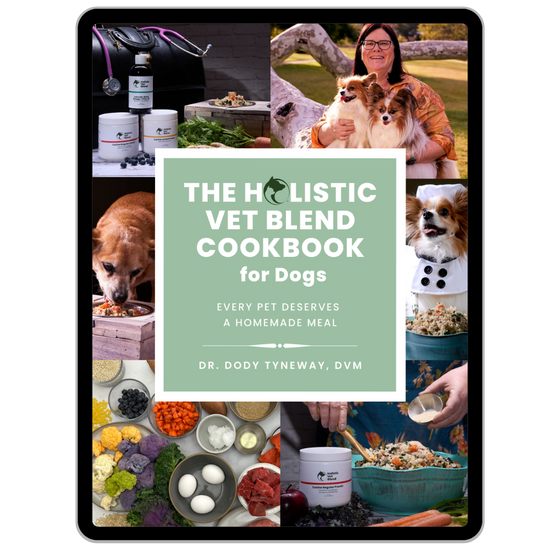
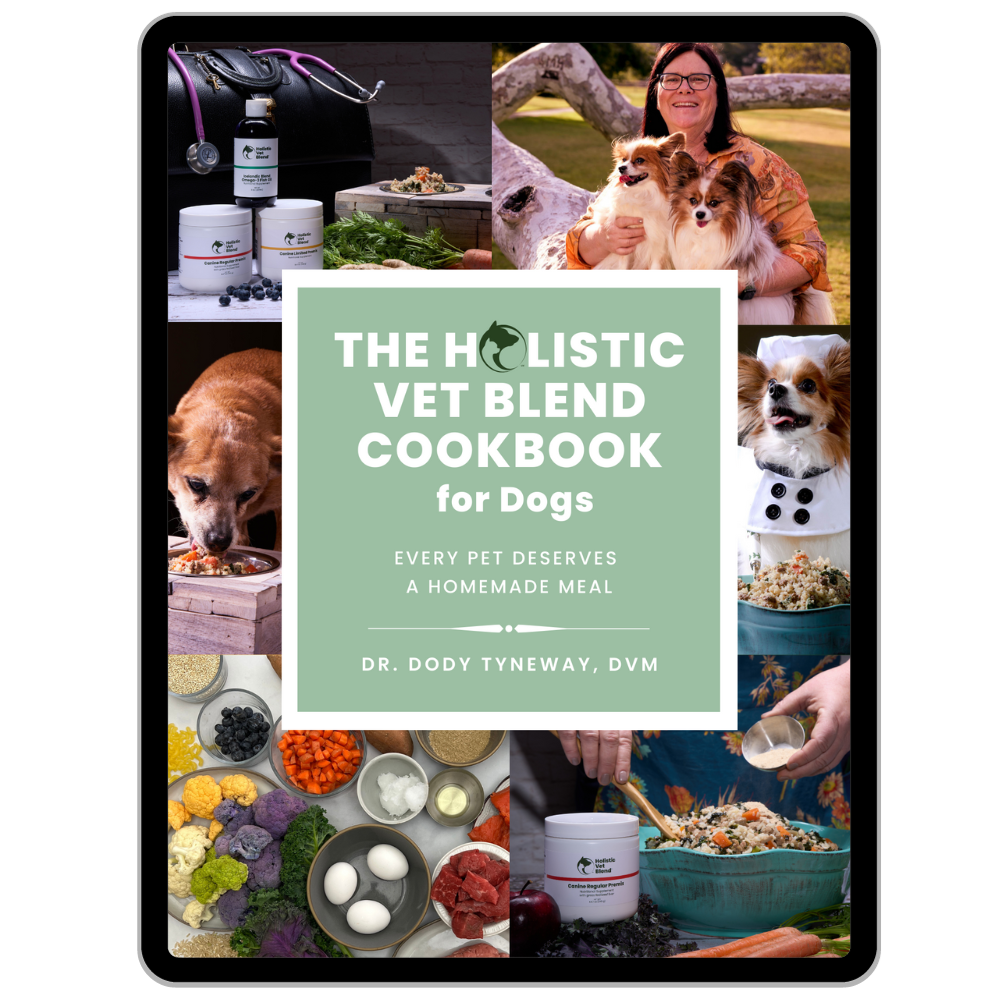
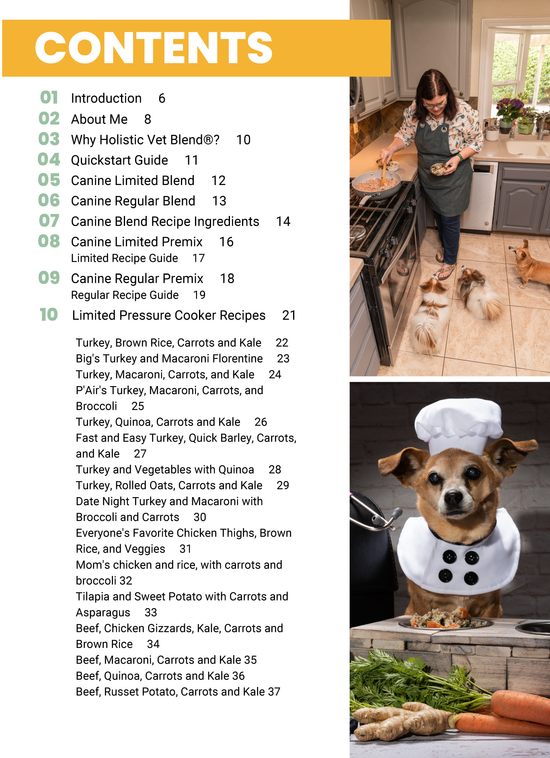
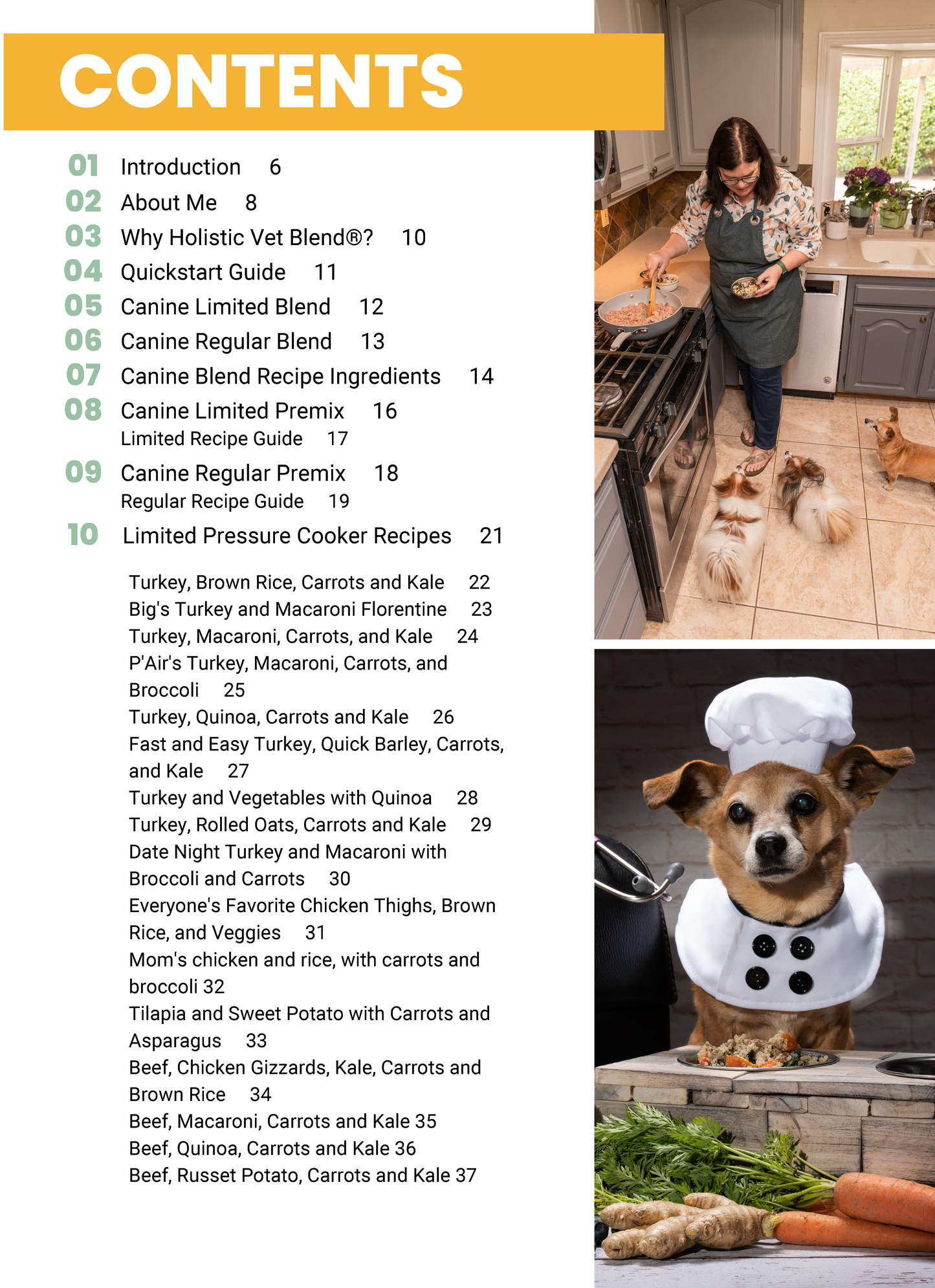
At Holistic Vet Blend, we want making homemade dog food to feel like something anyone can do (which it is!). That’s why Dr. Dody, a veterinarian on our team, has developed easy-to-follow homemade dog food recipes designed to work alongside a properly formulated premix.
These recipes are meant to give dog parents flexibility. Rather than locking you into one rigid formula, they let you rotate proteins, use seasonal ingredients, and tailor meals to your dog’s preferences.
You can watch Dr. Dody walk through some of her favorite homemade dog food recipes in the video below, where she explains how to prepare nourishing meals at home and how to pair them with a premix for complete nutrition:
Now about that premix…
Why the Canine Regular PreMix is an essential part of homemade feeding
While recipes provide the structure for making homemade dog food, they need a properly formulated premix of vitamins and nutrients to make them complete.
Which brings us to our Canine Regular PreMix. This premix was specifically formulated by our team of board certified veterinary nutritionists, PhD animal nutritionists, and veterinarians to complement whole food recipes. It does this by filling in the vitamin and mineral gaps that are difficult to meet through food alone.
Dr. Dody (a veterinarian on our team) said, “I understand the importance of proper nutrition for a dog’s overall health, and homemade dog food is a great way to give that to your dog.
“One thing I love about this premix is it frees up a pet parent’s options. It gives them the ability to use local and seasonal foods for their dogs instead of having to stick to a single recipe. This also means you can cater your homemade dog food diet to your dog’s individual tastes to give them meals you know they’ll love.”

Each ingredient in the Canine Regular PreMix plays a specific role in supporting balanced nutrition:
Calcium carbonate & dicalcium phosphate
These are key sources of calcium, an essential mineral for maintaining strong bones and teeth. Calcium also plays an important role in muscle and nerve function. Homemade diets are commonly low in calcium, making these nutrients critical additions to a balanced premix.
Dried beef liver
Beef liver is a naturally rich source of vitamins and trace minerals, including B vitamins. It also enhances palatability. That is, it makes meals more appealing for dogs (especially picky eaters).
Dried pumpkin & psyllium seed husks
These ingredients provide dietary fiber, which helps support your dog’s digestion and contributes to a balanced gut microbiome. Many dog parents notice improvements in their dog’s stool quality and regularity when they transition to homemade meals that include the proper amount of dietary fiber.
Dried primary yeast
Dried primary yeast is a natural source of B-vitamins and other support healthy metabolic function in the body. In a homemade dog food diet, these nutrients help support your dog’s energy metabolism and overall vitality.
Ginger
Ginger is included to support digestive comfort and function. Specifically, it’s been shown to support digestive motility. In plain terms, that means it helps keep food moving smoothly through your dog’s system.
Alpha-tocopherol acetate (Vitamin E)
Vitamin E acts as an antioxidant and helps support immune health while also playing a role in maintaining healthy skin and coat.
Dried kelp
Kelp provides naturally occurring trace minerals, including iodine, which supports normal thyroid function when included in the right amounts.
Zinc sulfate & copper gluconate
These trace minerals are essential for many processes in the body and support a healthy skin and coat, immune function, and overall metabolic health.
Taurine
Taurine is an amino acid that supports your dog’s heart health. While dogs can produce taurine from other amino acids, there are limits. For example, if a dog eats a homemade diet that relies wholly on muscle meat without enough organ meat, they won’t have enough of those precursor amino acids to make the taurine they need. Including taurine in the premix ensures your dog will have enough of this vital amino acid.
Cholecalciferol (Vitamin D)
Vitamin D supports calcium absorption and plays a vital role in immune function. If a dog develops a Vitamin D deficiency, they are more susceptible to infection and may have more difficulty fighting off any infection that takes hold.
It can be difficult for dogs to get enough Vitamin D through whole foods alone, which is why it’s included in the premix.
Conclusion
Making homemade dog food can be one of the most rewarding ways to nourish your dog. By combining whole, colorful ingredients with a carefully formulated vitamin and nutrient premix, you can feel confident that every bowl supports your dog’s health for a long and happy life.